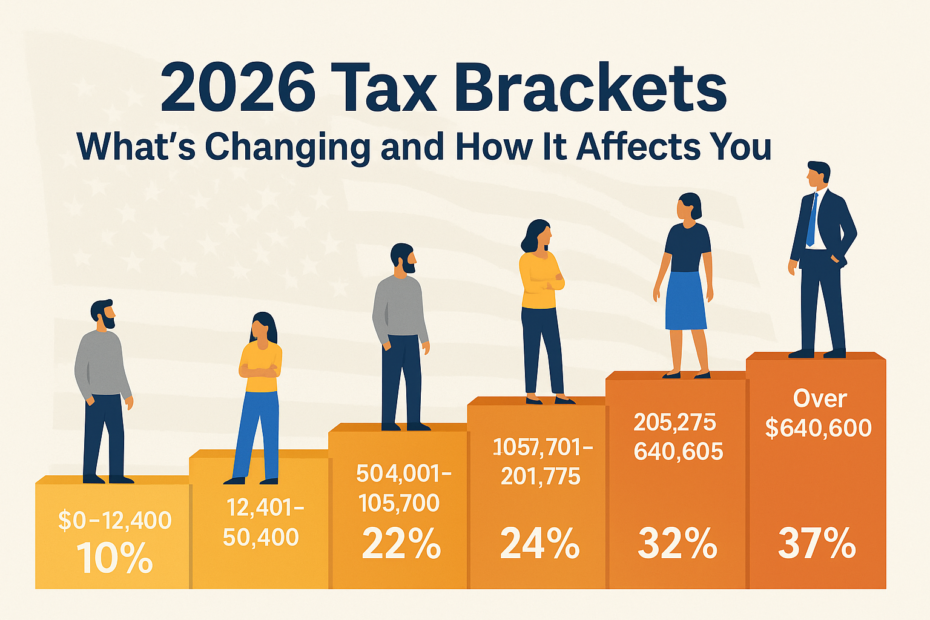

When filing taxes, millions of Americans face the same dilemma every year: Will they owe more taxes this year? Instead of simply adjusting tax rates, the answer to this question mostly relies on how the IRS adjusts federal tax brackets for inflation.
Taxpayers should be prepared for new income threshold ranges for the 2026-2027 tax year, which determine the amount of income subject to each federal income tax rate. Although the changes might appear to be procedural, they can make a difference when calculating take-home pay, tax planning, retirement benefits, or overpayments at the end of the year.
Whether you are a wage earner, a self-employed person, such as a professional, an investor, a retiree or a small business owner, it helps to understand how the federal tax brackets work so that you can make better financial decisions throughout the year – not just when you’re filing your return.
Why the IRS Adjusts Tax Brackets Every Year
There is one major misconception about taxes: that a government adjusts tax rates annually. In practice, the IRS is more likely to adjust the income level, rather than the tax rate itself.
Such annual adjustments are due to inflation. The more income the IRS allows in each bracket, the higher the wages will have to be to match the cost of living. This could help to reduce what’s known as “bracket creep,” whereby taxpayers might face higher taxes because their earnings rose due to inflation and not because they have more purchasing power.
These adjustments are intended to provide for a fair tax system for taxpayers and to reflect changes in economic conditions.
Understanding How Federal Tax Brackets Actually Work
Many mistakenly think that a higher tax bracket is where they get taxed at a higher rate on all their income.
Well, that’s not the case.
The United States has a progressive federal income tax system – that is, different parts of income are taxed at different rates.
For instance, if your taxable income falls into a higher bracket, the income above that amount will be taxed at the higher rate. The rest continues to be taxed at the lower rates.
That’s why a raise is almost always a net gain in a person’s income after taxes. Some of the extra income will be subject to a higher rate of tax, but most will be taxed at the lower rate.
Knowing this concept is useful to taxpayers who can make better financial decisions without the worry of moving into a higher tax bracket.
Who Should Pay the Closest Attention?
While it is important for anyone who files a federal tax return to keep up to date, there are some groups that stand to gain more from checking out the new tax brackets early in the year.
This includes:
- Staff members who are to be paid a salary increase or bonus.
- Freelancers and independent contractors
- Small business owners
- Individuals with capital gains or dividend income.
- Retirees who are receiving retirement distributions.
- Families who are eligible for tax credits and deductions
Small changes in taxable income for these taxpayers can affect their ability to claim deductions and credits, to plan for retirement and other benefits, and overall tax liability.
Why Tax Planning is more important than Tax Filing
When it comes to taxes, most people only think about them during the year.
Financial advisors are always pondering taxes.
It’s because tax planning occurs before you earn the money, not after you’ve filed the paperwork.
By checking tax brackets early, taxpayers can plan their finances all year. They can involve making more to your retirement plan, changing the way you deduct from your paycheck, selling investments at the right time or taking full advantage of deductions offered.
In contrast to the situation where an individual reacts to a tax bill, proactive planning puts him or her in control of financial outcomes.
Inflation Continues to Shape Tax Planning
While inflation has slowed from its rapid pace of recent months, Americans are still dealing with the higher cost of housing, groceries, healthcare, insurance and transportation.
While the IRS is not in a position to combat inflation, it does have the power to modify tax brackets to ensure that inflation doesn’t result in automatic raises of the effective tax rate for the taxpayer.
These yearly changes bring some respite by keeping more income in lower tax brackets.
With the increasing cost of living, becoming familiar with these shifts becomes a significant consideration for financial planning.
What Employees Should Review Before Year-End
Employees often assume their employer automatically withholds the correct amount of federal tax.
Withholding is correct in most payroll systems, but life circumstances can impact the amount of tax that should be withheld.
Your tax situation can change with a promotion, second job, bonus, marriage, or divorce, or for any other reason.
It is good to check your withholding from time to time to minimize the risk of getting an unexpectedly large tax bill—or of giving the government an interest-free loan by withholding too much.
Minor changes all year round can be quite noticeable.
There are also specific tax planning issues that are unique to small business owners. Understanding federal tax brackets is just one part of building a strong financial strategy, alongside making smarter investment decisions and long-term wealth planning that align with your personal goals.
Small Business Owners Face Different Tax Planning Challenges
In addition to the other items listed above, business owners are responsible for estimated quarterly taxes, deductible business expenses, retirement savings, and cash flow planning.
By understanding the federal tax brackets their projected income will be in, business owners can make savvier decisions before year-end.
Depending on their financial plan, some might speed up their purchases of equipment, make larger contributions to retirement plans, or defer income to next year.
The decisions should always be made based on long-term business goals, not just for tax savings.
Why Retirement Planning and Tax Brackets Go Hand in Hand
Retirement planning is also affected by federal tax brackets.
Donations to traditional retirement plans can lower current income tax, but withdrawals from Roth retirement plans can be tax-free in retirement.
Similarly, when they’re withdrawing funds from retirement accounts, retirees need to know how withdrawals will impact their taxable income.
If someone moves into a new bracket, this could affect their federal taxes, Medicare premiums, and even their taxes on Social Security income.
Tax brackets should be reviewed in conjunction with retirement plans to help develop a more comprehensive long-term financial plan.
Beyond Tax Season.
Federal tax brackets shouldn’t be viewed as information that’s only relevant in April.
They are a planning resource that impacts budgets all year.
If you’re in the process of negotiating a raise, investing, starting a business, saving for retirement, or budgeting for your household, knowing how taxable income is determined can help you make better financial decisions.
The most successful taxpayers don’t just wait until tax season to get ready—they work all year long to get ready.
Final Thoughts
The federal tax brackets for 2026–2027 are more than mere updates on income thresholds. The benefit of them is that they let the taxpayer take a look at his/her finances, realize how inflation is impacting taxes, and decide how to handle his/her finances before the filing season begins. Although the IRS makes annual changes that seem insignificant, they could affect your withholding, retirement plans, investments, and tax liability. It’s not only about paying the right taxes, but it’s also about making smarter financial choices all year long and establishing a better financial base for long-term success.
Tax planning becomes even more important as people approach retirement, making retirement planning in today’s economy an essential part of managing long-term financial security and reducing future tax burdens.