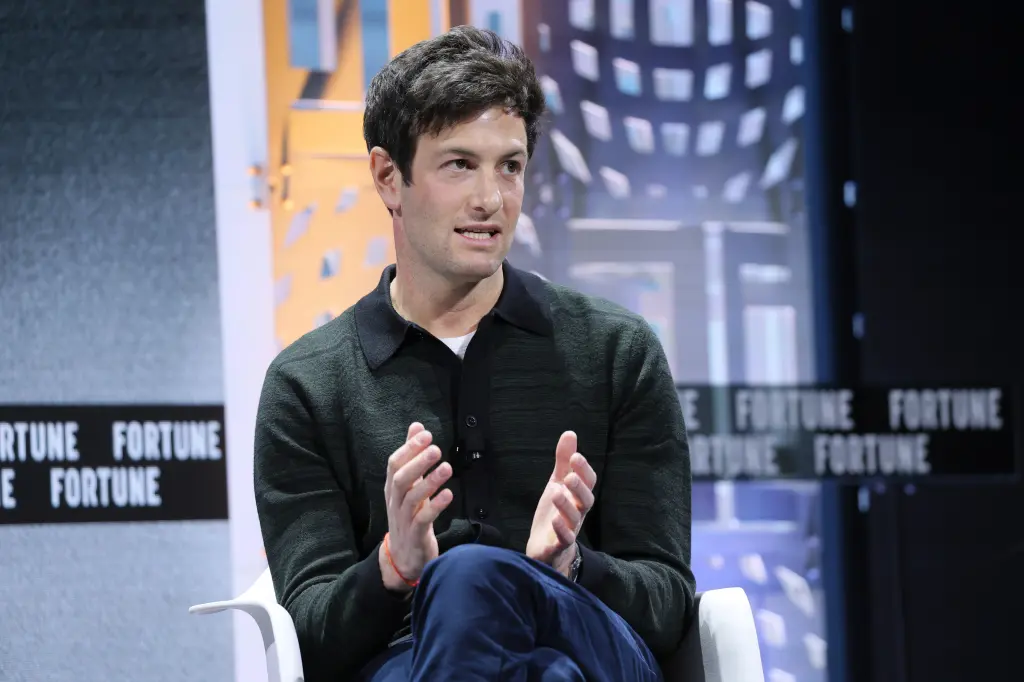

Josh Kushner’s wealth looks very different now. In 2026, Forbes puts his net worth at about $16.7 billion. That is up from an earlier estimate of $5.2 billion a year before.
Forbes also notes that the 41-year-old backs Thrive Capital. His gain this year is among the largest percentage jumps among wealthy Americans. His net worth is up by more than 220%.
The increase does not seem to be from one obvious payout. There was no clear single-company sale and no standard inheritance windfall. Instead, the change lines up with how much Thrive’s investments are worth.
Thrive holds stakes in companies including OpenAI and SpaceX. The value of those holdings has risen. Thrive’s assets under management grew from around $23 billion at the end of 2024 to about $65 billion by August 2026.
This setup is important. Much of Kushner’s fortune is tied to private-company prices. So the rise reflects estimates of equity value. It is not the same as cash in a bank account.
When Thrive’s portfolio firms are priced higher, the value counted for Kushner’s share also goes up.
Overall, the numbers point to a broader shift. The AI wave and strong demand for private tech companies are changing how venture investors’ fortunes grow.
How Josh Kushner’s Fortune Tripled
Kushner’s wealth often traces back to Thrive Capital. He launched the firm in 2009 at age 24. Thrive began with a $5 million fund. Over time, it put money into early companies like Instagram and Spotify, along with other tech businesses.
Thrive did not follow the usual venture model of spreading bets across many areas. Instead, Kushner leaned toward fewer investments. The idea was to back companies he thought could grow into large businesses.
This focus mattered even more as Thrive took stakes in some of the biggest private tech firms worldwide.
In February 2026, Thrive said it secured more than $10 billion for its newest investment vehicles. That figure was about two times the size of its earlier fund. Reports said the round was oversubscribed. Investors wanted more access to what Thrive was backing, including artificial intelligence, space, robotics, and life sciences.
By August, the firm said its assets were near $65 billion. That was close to three times what it reported at the end of 2024. This rise helped drive much of the jump in Kushner’s estimated personal wealth.
Read fully about the Drama in World Leadership: War, government shutdowns and a troubled economy for the US
OpenAI Became a Major Part of the Equation
OpenAI has been one of Thrive Capital’s most important investments.
Thrive has participated in multiple financing transactions involving the artificial-intelligence company, whose valuation has climbed dramatically as demand for ChatGPT and other AI products has accelerated.
The scale of that relationship has also evolved beyond a conventional venture investment. In December 2025, OpenAI announced that it had taken an ownership stake in Thrive Holdings, a business created by Kushner to acquire companies in sectors such as accounting and IT services and apply AI to their operations.
The arrangement illustrates how closely intertwined the economics of AI investing have become. Thrive is an investor in OpenAI, while OpenAI became an investor in a Thrive-backed vehicle. The two companies also agreed to work together on deploying AI inside businesses acquired by Thrive Holdings.
That gives Kushner exposure to two sides of the same trend: the rising value of frontier AI and the effort to apply those systems to traditional businesses.
OpenAI’s valuation has continued to climb in 2026. The company was reportedly discussing a new private funding round at a valuation above $1.2 trillion in September, after having raised capital at an $852 billion valuation earlier in the year.
Any further increase in OpenAI’s valuation could therefore have implications for investors such as Thrive. But private-market valuations can also move in the opposite direction, which is important when considering how much of Kushner’s wealth is tied to these holdings.
SpaceX Added Another Big Lift
SpaceX provided another major boost.
Thrive first invested in SpaceX when the rocket company was valued at about $38 billion. After SpaceX went public in June 2026, Thrive’s stake was estimated to be worth roughly $10 billion.
That is a dramatic change from the value of the original investment.
SpaceX has become much more than a launch company. Its Starlink satellite business has developed into a major commercial operation, while the broader company has continued to attract investor attention because of its rockets, satellite infrastructure and long-term ambitions in space.
The public-market transition also matters because it creates a clearer reference point for the value of Thrive’s holding. Private investments can be difficult to price because they lack a continuously traded market. A public listing changes that equation.
SpaceX’s valuation and Thrive’s stake consequently became one of the clearest drivers behind the growth in the firm’s assets.
Cursor Shows How AI Is Expanding the Wealth Effect
SpaceX was not the lone bet that saw a big jump in value.
Thrive also holds roughly 7% of Cursor, the company that builds AI coding tools. When SpaceX moved to buy Cursor for about $60 billion, Thrive’s share was said to be worth around $4.2 billion.
There is another angle here, too. SpaceX is already a key Thrive investment. So, in a sense, SpaceX was buying a firm where Thrive also had money tied up.
For Kushner, the point is about compounding in a concentrated portfolio. One win can raise the total value right away. Then the same win can show up again inside a separate deal that boosts another holding.
This link between investments can speed up wealth when prices climb. At the same time, it can be tough to judge the true financial picture beneath it all.
The Money Behind Thrive Capital
Kushner’s wealth is tied more to his stake in Thrive than to what he earns as a manager.
Thrive started as a smaller investment shop. It has since become a large platform worth billions. Its newest fundraise brought in over $10 billion, which gave Thrive extra cash to put into private companies.
Still, assets under management are not the same as personal money.
Thrive handles funds for outside backers, called limited partners. Those investors hold the economic return from the funds. Kushner and other firm members make money through management fees. They also benefit from carried interest and from owning part of the firm that runs the business.
That split is the reason a figure like $65 billion in assets does not mean Kushner has $65 billion in his name.
Forbes puts his net worth at $16.7 billion. That number is based on Kushner’s ownership and his economic interests. It is not based on the total amount Thrive oversees.
Thrive Is Moving Beyond Traditional Venture Capital
Kushner has been growing businesses that sit on top of an investment portfolio. He is not only buying small stakes and then waiting for an exit.
Thrive Holdings is the most obvious case.
The firm started in 2025. It buys service companies. It says it wants to use AI to make day to day work run better.
OpenAI is part of the setup. In this arrangement, OpenAI brings tech and people. In return, it gets an ownership share in Thrive Holdings.
Overall, the plan depends on one idea. AI can add value. It can do that by building new kinds of software firms. It can also do it by reshaping older companies in fields that have not relied on technology much.
That is not the same as placing bets on the next big AI startup.
There is also a possible upside for Kushner. If the purchased businesses do better, their numbers improve. If Thrive then looks stronger, it may draw higher valuations for the holding company.
From Technology Investments to the Lakers
Kushner’s wealth keeps rising, and it is opening doors beyond Silicon Valley.
In August, he teamed up with former Disney boss Bob Iger to buy the Los Angeles Lakers. The price is set at $12.5 billion. Even so, the sale still needs approvals and other steps before it can be finalized.
That Lakers purchase stands out on its own. Yet it also shows how Kushner’s focus is shifting.
Tech firms can scale fast, but they can still be hit by new rivals, rule changes, and shifts in what customers expect. A sports team is different. It is tied to limited ownership rights and it earns money from media deals, ads, sponsorships, games, and fans around the world.
Kushner is already putting Thrive money into sports. Reports say he holds a minority stake in the San Francisco Giants.
Overall, this points to a broader plan. He is not limiting himself to startups and tech anymore.
The Risk Behind a $16.7 Billion Fortune
A fast jump in net worth can hide a simple point: a lot of the gain comes from how things are priced.
Kushner’s estimated fortune of $16.7 billion does not mean he has $16.7 billion in cash or other easy-to-spend assets. When private firms get valued lower, the same holdings can drop in value too.
This matters more when most of the money sits in a small set of companies, especially ones tied to AI and other fast-growing areas.
Take OpenAI. The business still needs large sums of money to train models and to run the computing systems. Reports say it is in talks about another funding round, with a valuation above $1.2 trillion. At the same time, people are asking how it will reach profit, and they point to how costly the AI setup can be.
SpaceX has its own issues. Building and maintaining space systems takes serious funding. There are also long-term doubts about how Starlink will pay off, plus the risks that come with growth into nearby business lines.
There is also the issue of being too concentrated. A few big wins can lift a venture portfolio fast. But when valuations slide in AI or other private tech, wealth linked to those firms can shrink just as quickly.
What Comes Next for Josh Kushner
Kushner’s next chapter might not be about chasing the next viral app. It may be more about running the huge platform his early wins helped build.
Thrive has received billions in new money. The firm backs work tied to AI and other tech fields. It also uses investment setups aimed at companies that sit beyond the usual venture capital lane. Its ties to OpenAI put it in a clear spot as generative AI rolls into the market.
On top of that, the Lakers deal could place one of the most famous sports teams in Kushner’s asset list, but only if the agreement actually closes.
So the key issue is simple to ask, but hard to answer. Can Josh Kushner’s wealth keep growing at this speed?
Going from $5.2 billion to $16.7 billion in one year happened for a mix of factors. Tech values were rising fast. His bets were focused. Thrive also grew at the same time.
Doing that again will likely be tougher. Once you reach this level, you are not just riding the early rise of small, promising firms. You are overseeing a portfolio that includes major private companies that people watch closely.
That is why Josh Kushner’s fortune is a good sign of a wider change in how wealth is made today. When someone is near the ownership of new, game changing tech, their money can jump a lot well before the rest of the world hears the company’s name. Sometimes it happens even before the firm goes public.