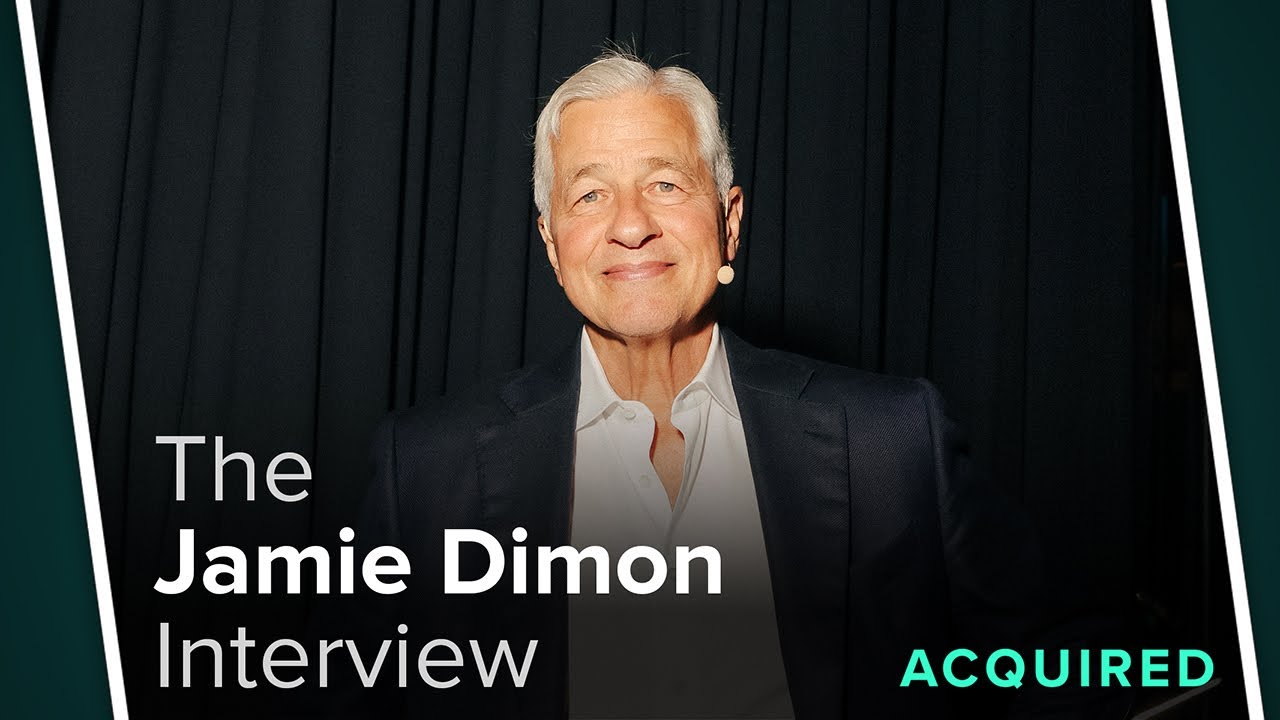

Jamie Dimon is the long time CEO of JPMorgan Chase, one of the most influential voices in global finance. Whenever he shares his views on markets, leadership, the economy, or investing, business leaders and individual investors alike pay close attention. His recent hour-long podcast interview included many helpful tips on the current economy, long term investing and the attitude you need to have when dealing with a more unpredictable financial environment today.
Instead of paying attention to the news in the short term, Dimon said he wants to focus on creating businesses that can be resilient to changes in the market, to the economy, and on the financial side. Below are the top 5 lessons learned and their significance for investors from the discussion.
1. Long-Term Thinking Still Wins
One of the best points Jamie Dimon made was that investing successfully doesn’t require reacting to all of the ups and downs in the market. Rather, the focus should be on the creation of value over the long term.
Markets are cyclical and go through growth, correction and uncertainty phases. Of course, the short term is often the focus of the news cycle, but successful investors have historically enjoyed greater success by sticking to their well-researched investment strategies.
For individual investors, this means not making judgments on a day-to-day basis based on market performance. A well-rounded portfolio with a long-term investment strategy may be more beneficial in the long term than attempting to predict all market movements.
2. Economic Uncertainty Is the New Normal
Dimon admitted there are a few issues in today’s economy, such as the worry about inflation, geopolitical issues, interest rate shifts and changes in global trade.
Investors who take the view that the economy will remain stable should also account for the possibility that there will be more than one scenario.
Building financial flexibility is becoming increasingly important. The investors can gain from:
- Maintaining diversified investments
- Having sufficient emergency savings,
- Regularly reviewing portfolio risk.
- Avoiding excessive leverage
Planning for uncertainty is not predicting the worst, it’s simply planning financially for any outcome.
3. Strong Leadership Matters in Every Market
Throughout the interview, Dimon kept bringing the issue of leadership up. Making decisions is even more critical when you’re unsure of what’s happening, whether you’re running a multi-national business or a personal investment portfolio.
There are a number of features that are common to successful organizations:
- Clear long-term planning
- Strong financial discipline
- Adaptability during change
- Responsible risk management
The same principles can be used by investors when assessing companies. Companies that are well established and their leadership teams have a solid grip on their financials tend to be stronger when the economy takes a turn for the worse.
4. Technology Continues to Reshape Finance
Throughout the conversation, there was a lot of technology. AI, digital banking, cyber security and data analytics are transforming the way financial institutions work.
Banks are spending billions of dollars on cutting-edge technology to enhance the customer experience, fight fraud more effectively and streamline operations.
Technology innovation can provide opportunities and risks to investors.
Those firms that are able to effectively embrace new technology will be better positioned to have a competitive advantage, whereas the businesses that are not innovative may struggle to meet the evolving market needs.
Therefore, the ability to incorporate technology change into a firm has become a priority for investment research.
5. Discipline Is More Valuable Than Market Timing
The most useful lesson from the interview was surely the focus on discipline that Dimon had.
There are so many investors who invest a lot of their time in forecasting the market. But it’s very hard to time the market, even for those who know what they’re doing.
Rather than that, disciplined investing is about:
- Regular portfolio reviews
- Consistent contributions
- Diversification
- Risk management
- Long-term objectives
This helps investors to make rational decisions in the market when it is volatile.
What These Lessons Mean for Everyday Investors

Jamie Dimon’s ideas are not pertaining to Wall Street professionals alone. Many of the principles can be applied to individual investors of any portfolio size.
These are some practical measures that can be taken:
- Check investments targets once a year.
- Diversify investments among asset categories.
- Don’t stop investing when things aren’t going well in the market.
- Take focus on financial education.
- Don’t take your decision on the basis of headlines.
It is important to remember that while some investments can be ‘perfect’, consistent behaviour over many years is often the key to financial success.
Why Investors Keep following Jamie Dimon
Jamie Dimon is the CEO of one of the world’s biggest financial firms, and has led JPMorgan Chase through economic crises, shifting interest rates, technological disruptions and global economic uncertainty.
His views are sometimes eye-catching due to the combination of sound business knowledge and a long-term perspective of economic trends.
Although leaders cannot recapture all of the changes in any given market, investors often turn to leaders such as Dimon for information on larger financial moves that could impact the markets in the long run.
Strong investing habits begin with good money management. Before building wealth, it’s important to develop smarter budgeting strategies that help you control spending and prepare for long-term financial goals.
Final Thoughts
In the Jamie Dimon Podcast Interview, several enduring investment fundamentals were highlighted: invest for the long-term, take the time to prepare for the uncertainties of investing, appreciate good leadership, accept that new technologies are the norm, and stay disciplined.
Volatile markets are always a thing, but the ones that will persist in winning will be the ones who will be prepared to focus on the bigger picture and not succumb to the short-term jitters.
These five lessons can be a helpful tool in making smart investments in the current economic climate, whether you’re just starting out or you already have an investment portfolio. Many of Jamie Dimon’s insights also apply to entrepreneurs. Implementing financial planning strategies for small business owners can improve cash flow, strengthen decision-making, and build a more resilient business over time.